01 Jun, 2026
- 6 min
 01 Jun, 2026
 6 min
6 min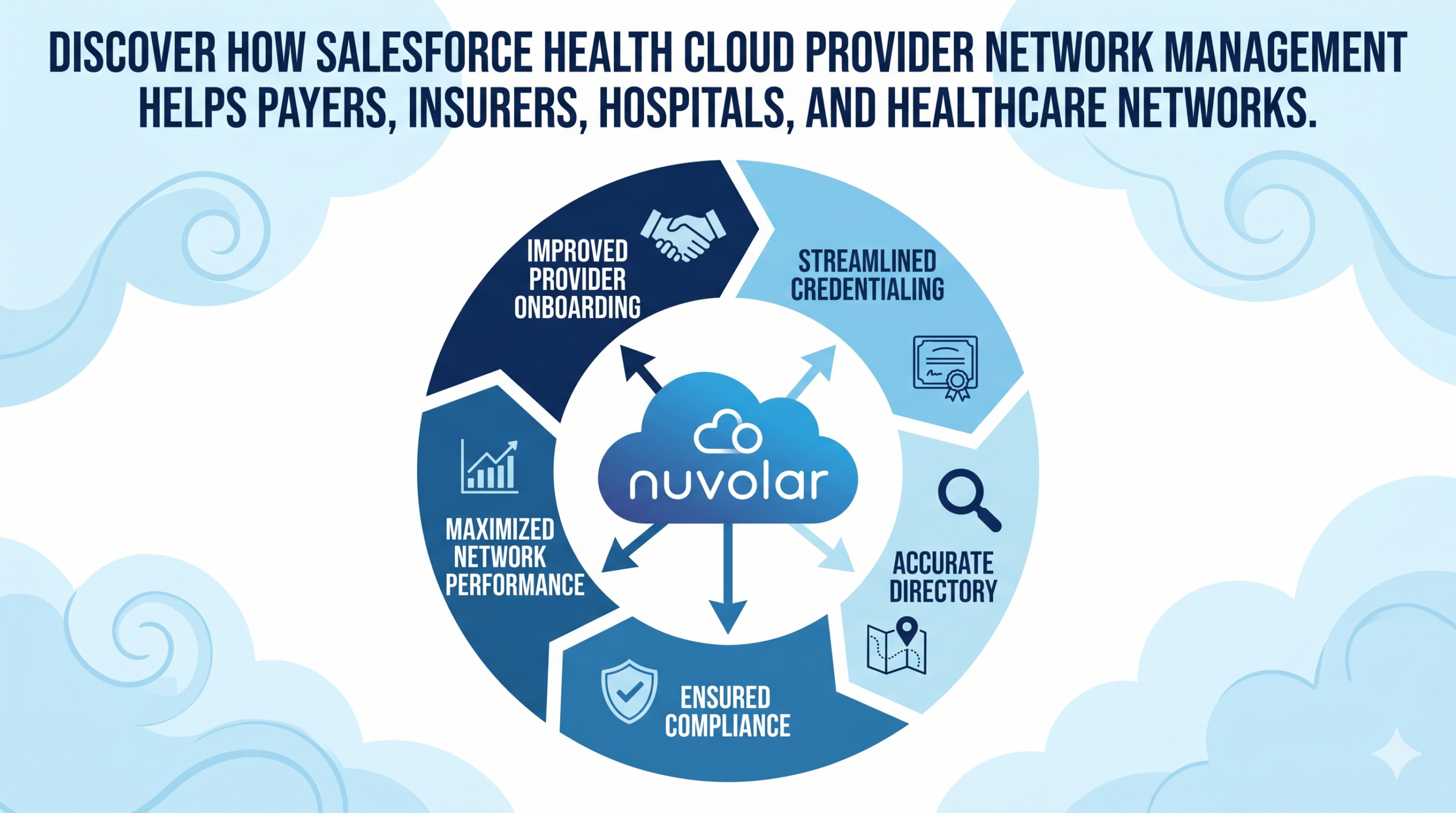
Here is the second section of your content, styled with the exact same clean, conversion-focused WordPress block-editor layout. It uses matching typography hierarchy, structured data tables, and callout boxes to keep your user experience perfectly seamless.
Salesforce Health Cloud Provider Network Management: A Complete Guide
Healthcare organizations keep running into tighter demands when it comes to handling provider networks. Speed matters, yes, but so does precision, and transparency cannot be ignored either.
Payers along with insurers, provider groups, hospitals, life sciences companies, and administrators all lean on solid provider data to keep things moving. They want credentialing that does not drag. Contracting that flows without constant backtracking. Visibility into how networks actually function day to day.
Salesforce Health Cloud Provider Network Management steps in at that point, giving a clearer path forward.
Salesforce frames this tool as part of Health Cloud, aimed at helping payers and provider groups bring providers on board, shape workable networks, and keep the stronger performers connected over time. Recruiting, credentialing, contracting, onboarding, self-service options, and network adequacy checks all sit inside that same space.
Table of Contents
What Is Health Cloud Provider Network Management?
Health Cloud Provider Network Management itself amounts to a Salesforce setup made for healthcare groups that oversee provider ties from start to finish. Instead of juggling spreadsheets, scattered emails, separate portals, and manual cycles for pay or contracts, teams can gather provider details onto one platform in the cloud.
The Unified Healthcare Flow
Healthcare staff can handle a comprehensive range of operational steps all in one flow:
-
Recruitment and enrollment
-
Credentialing and verification
-
Contracts and records
-
Network ties and affiliations
-
Directories and location details
-
Self-service updates from providers
-
Adequacy checks
-
Performance tracking
-
Compliance steps
The Provider Data Model
The provider data model inside Salesforce Health Cloud pulls together complex data layers to create a steadier base for searching providers, managing relationships, and running network operations without constant guesswork:
| Data Layer | Managed Elements |
| Individual Profiles | Practitioners, specialties, education histories |
| Credentials & Compliance | Certifications, licenses, renewal dates |
| Network & Operations | Payer networks, facility networks, affiliations, locations |
The Challenge of Fragmented Provider Data
Provider networks rarely stay simple. One practitioner might split time across several facilities, join multiple payer networks, carry different specialties, and need ongoing updates to credentials.
When the information sits in pieces, the effects spread across the whole system:
-
Outdated directories show up often.
-
Onboarding slows to a crawl.
-
Credentialing turns into a drawn-out manual task.
-
Contracting stays disconnected.
-
Gaps in the network stay hidden until they cause problems.
-
Proving adequacy grows harder.
-
Members and patients notice the friction.
-
Administrative costs climb.
Directory accuracy touches compliance and trust at the same time. Wrong details can limit access to care, raise costs, and wear down patient experience. Studies have shown how much administrative load falls on practices when they answer update requests from many health plans, each with its own platform and schedule.
Key Benefits of a Centralized System
A Centralized View of Provider Relationships
Organizations see providers, facilities, specialties, licenses, affiliations, contracts, and interactions together. Teams in provider relations, operations, compliance, contracting, and member services end up working with fewer blind spots.
Accelerated Enrollment and Onboarding
Provider enrollment and onboarding move faster once automated workflows, digital forms, document collection, and task routing replace the old manual steps. Delays shrink, and providers encounter a smoother start.
Simplified Credentialing and Compliance
Tracking benefits when required documents, certifications, licenses, approvals, and renewal dates live in one spot. Health plans, hospitals, integrated delivery networks, dental groups, behavioral health networks, and specialty organizations all find this tracking useful.
Accurate, Up-to-Date Directories
Directories stay closer to accurate when providers can update their own information and data connects across workflows. Names, addresses, specialties, availability, locations, and network status hold up better over time. Members locate care with less hassle, and regulatory needs get met more easily.
Real-Time Network Visibility
Real-time visibility into the network lets leaders spot strengths and gaps more quickly. They can check provider availability by area, specialty coverage, facility participation, credentialing status, contract details, adequacy measures, and performance trends. Planning improves, decisions speed up, and member access gets better as a result.
How Different Organizations Use the Platform
-
Health Plans: Handle enrollment, credentialing, contracts, participation, directory updates, and member search in one place.
-
Provider Groups & Healthcare Systems: Gather practitioner records, facility ties, licenses, specialties, locations, and operational steps centrally, cutting down on duplicated work and strengthening data governance.
-
Hospitals & Integrated Delivery Networks: Track employed providers, affiliated physicians, facilities, departments, and specialty networks to support better care access and referral handling.
-
Specialty Networks (Dental, Vision, Behavioral Health): Gain structure for complex credentialing, location, availability, and directory needs, raising day-to-day efficiency.
-
Self-Service Portals: Allow providers to update details, submit documents, and check status via dedicated portals. This lifts provider satisfaction while lowering manual effort on the payer side.
Compliance, Regulations, and Legacy Risks
Network adequacy and directory accuracy remain central concerns under regulations that push health plans to keep provider information current and reliable. The No Surprises Act adds specific obligations around directories, including corrective steps within set timeframes after issues surface. Health Cloud shifts the approach from reactive fixes to ongoing, connected management of records, approvals, workflows, and reports.
The Operational Risk of Legacy Systems
Legacy systems, spreadsheets, and email inboxes still handle provider data in many organizations, which builds operational risk. Duplicates appear, credentialing drags, directories fall out of date, onboarding stalls, reporting stays limited, compliance gaps widen, and providers grow frustrated. A modern platform supplies one reliable source that supports automation, reporting, and digital engagement as needs grow.
Best Practices for Implementation
Putting Health Cloud Provider Network Management in place involves more than technology alone. It calls for process knowledge in healthcare, Salesforce architecture, data planning, integration work, automation setup, and change management.
Nuvolar AI works with healthcare and life sciences groups to shape and roll out Salesforce solutions that link people, data, and workflows.
Our comprehensive support services cover:
Health Cloud implementation & Provider Network Management setup
Provider data model design & legacy system integration
Credentialing automation & data migration quality efforts
Experience Cloud for self-service provider portals
AI-driven workflow improvements
Broader healthcare CRM consulting and managed services
Final Thoughts
Provider networks sit at the core of access to care. When data stays inaccurate, scattered, or handled manually, payers and healthcare groups deal with higher costs, slower processes, compliance strain, and weaker member experiences.
Health Cloud Provider Network Management supplies a current method for handling provider relationships, credentialing, contracting, directory accuracy, and network visibility from one platform. For payers, hospitals, provider groups, and specialty networks, this reaches beyond a simple CRM upgrade. It points toward smoother operations, stronger provider experiences, and care that stays more reachable.
If an organization wants to update onboarding, credentialing, directory management, or network visibility, Nuvolar can outline and build the fitting Health Cloud solution.